25.11.08

'...born between 1978 and 1994': is that you?

The article is titled "The kids are alright", it is about the 'net generation' and I read it today in the Economist (Nov 15 issue). A couple of quotes that made me feel good about you (my students) and my own kids:
....the Net Geners are smarter, quicker and more tolerant of diversity than their predecessors,” Mr Tapscott argues. “These empowered young people are beginning to transform every institution of modern life.” They care strongly about justice, and are actively trying to improve society...

Or:
Contrary to the claims that video games, Facebook and constant text-messaging have robbed today’s young of the ability to think, ...the “Net Geners” are the “smartest generation ever”.

And:
There is growing neuroscientific support for this claim. People who play video games, for example, have been found to process complex visual information more quickly. They may also be better at multi-tasking than earlier generations, which equips them better for the modern world.


So, just because 'we' didn't do it, it doesn't mean that it is bad / unacceptable / catastrophic!

PS: 'the kids are alright' is a reference to a song by the Who in their album 'My Generation'. I didn't like any of the youtube versions of 'The kids are alright' I found so I am posting another great song: 'Behind Blue Eyes':


PS1: (isn't Pete T. pretty cool?)
PS2: Obviously, this one has absolutely no relationship to IB economics!

24.11.08

A trip to the world of ideas....

Στην τάξη έγινε μια μικρή αναφορά στη λογική, στα μαθηματικά και στα παράδοξα. Όποιος περίεργος και παράξενος θέλει να ρίξει μια ματία σε αυτά τα τρία πιο όμορφα και καθαρά αντικείμενα σκέψης του ανθρώπινου εγκεφάλου μπορεί να βρει πληροφορίες και υλικό για τον κύριο Kurt Goedel....
μ.μ.θ
Δ.Α

20.10.08

An ingenious example of speech and politics

An ingenious example of speech and politics occurred recently in the United Nations Assembly and made the world community smile.


The Palestinian Representative's Speech at the UN


'Before beginning my talk I want to tell you something about Moses. When he struck the rock and it brought forth water, he thought, 'What a good opportunity to have a bath!'

He removed his clothes, put them aside on the rock and entered the water.

When he got out and wanted to dress, his clothes had vanished.

An Israeli had stolen them.'

The Israeli representative jumped up furiously and shouted, 'What are you talking about? The Israelis weren't there then.'

The Palestinian representative smiled and said:

'And now that we have made that clear, I will begin my speech.'

28.9.08

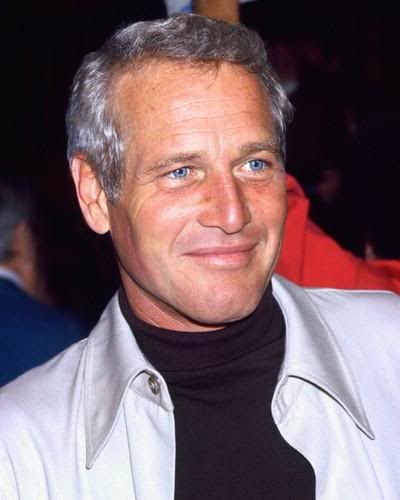
Paul Newman 1925-2008


...να δω με ποιους θα μεινουμε στο τελος!!


Λοιπον, για οσους δεν γνωριζανε,
ο Πωλ Νιουμαν γεννήθηκε το 1925 στο Κλίβελαντ της πολιτείας του Οχάιο, με το που απολυθηκε απο τον στρατο το 1946 πήγε στη δραματική σχολή του Γιέιλ και μετά μετακόμισε στην Νέα Υόρκη. Εκεί φοίτησε στην περιβόητη δραματική σχολή Actors Studio.

Την δεκαετία του 1960, έχτισε, με μια σειρά μεγάλων ταινιών, τον προσωπικό του θρύλο. Λυσσασμένη Γάτα, Ο Κόσμος Είναι Δικός μας, Γλυκό Πουλί της Νιότης, Όχι Δάφνες για τους Δολοφόνους, Άγριος σαν Θύελλα, Ο Μεγάλος Δραπέτης, Οι Δύο Ληστές. Το 1968 γνώρισε την Joanne Woodward, με την οποία παρέμεινε παντρεμένος μέχρι και σήμερα. To 1970 έπαιξε στο οσκαρικό Κεντρί και την υπερπαραγωγή Ο Πύργος της Κολάσεως.
Από τα 1980 ξεχώρισαν οι ρόλοι του στα Η Ετυμηγορία και Το Χρώμα του Χρήματος, το οποίο, μετά από έξι άστοχες υποψηφιότητες, του χάρισε το πολυπόθητο αγαλματάκι για τον Πρώτο Ρόλο. Έκανε συνολικά δύο γάμους (Jackie Witte, Joanne Woodward) και έξι παιδιά, τρία με κάθε σύζυγο. Δέκα φορές υποψήφιος για Όσκαρ, ένα βραβείο Bafta, ένα βραβείο ερμηνείας στις Κάνες, τέσσερεις Χρυσές Σφαίρες και την αμέριστη αγάπη του παγκόσμιου κοινού.


Στις 13 Αυγούστου 2008, ο Πολ Νιούμαν αποφάσισε ότι είχε παλέψει και αντέξει αρκετά. Μετά από έξι μήνες χημειοθεραπείας και άλλων μεθόδων καταστολής, επέλεξε να παραδοθεί στην αναπόφευκτη μοίρα κάθε ανθρώπου που βρίσκεται αντιμέτωπος με την πιο επιθετική μορφή καρκίνου του πνεύμονα. Ανακοίνωσε στη Τζόαν και στα παιδιά του ότι θέλει να φύγει από το νοσοκομείο της Νέας Υόρκης που νοσηλευόταν από τις αρχές της χρονιάς και να επιστρέψει στο σπίτι του στο Κονέκτικατ για να διευθετήσει τις τελευταίες εκκρεμότητες πριν πεθάνει.
Ειχε πει μαλιστα πως 8ελει ο θανατος να τον βρει στο σπιτι του και οχι σε καποιο νοσοκομειο. Ηθελε να συνεχισει να ζει οσο μπορεσει!!
“I’m not able to work anymore as an actor at the level I would want to,” ειπε σε μια εμφανιση του στο Good Morning America. “You start to lose your memory, your confidence, your invention. So that’s pretty much a closed book for me.”


Μερικές εβδομάδες αργότερα, έμπαινε στο αγωνιστικό του αυτοκίνητο για έναν τελευταίο γύρο στην πίστα που φιλοξενούσε τις προπονήσεις και τους αγώνες του τα τελευταία 30 χρόνια. Ένα μήνα αργότερα, το διεθνές κοινό μάθαινε σοκαρισμένο όχι μόνο την είδηση του θανάτου ενός εκ των τελευταίων γιγάντων του Χόλιγουντ, αλλά και την έκταση της ασθένειάς του το τελευταίο τρίμηνο.


Πολιτικοποιημένος ηθοποιός, έπαιξε επίσης σημαντικό ρόλο στο κίνημα για τα πολιτικά δικαιώματα, συμμετείχε σε ορισμένες εκστρατείες του Δημοκρατικού Κόμματος καθώς και σε διασκέψεις για τον πυρηνικό αφοπλισμό.

To 1978, o μοναχογιος του, Σκοτ, πεθανε απο υπερβολικη δοση αλκοολ και ναρκωτικων ουσιων. Ήταν ενα πολυ μεγαλο πληγμα για τον ηθοποιο, ο οποιος εδιεξε ομως να το ξεπερνα πολυ γεναια, ιδρυοντας ενα ιδρυμα, το 'Scott Newman Center' με σκοπο μεσω εκπαιδευτικων προγραμματων να σταματησει η χρηση ουσιων!

Τη δεκαετία του 1980 ο Νιουμαν ξεκινησε την δικη του εταιρια τροφιμων, που εφτιαχνε ντρεσσινγκ σαλατας τα οποια εδινε στους φιλους του τα Χριστουγεννα. Η επιχειρηση του συνεχιστηκε και αρχιζε να πουλαει τα σκευασματα σε μαγαζια τα εσοδα απο τα οποια εδινε σε φιλανθρωπιες! Το ποσο που ειχε μαζεψει μεχρι την τελευταια συνεντευξη του ηταν 200,000,000 δολαρια, ειχε ταησει δηλαδη περιπου 14,000 παιδια!!!!
Λιγα χρονια μετα, εφτιαξε το 'Hole in the Wall Camps', ενα μερος που θα χαριζε σε παιδια με πολυ σοβαρες ασθενειες δωρεαν διακοπες! Σημερα υπαρχουν 8 παρακλαδια του Camp στην Αμερικη, την Ιρλανδια, την Αγγλια και την Γαλλια.


Εχτες, στις 26/9, εφυγε απο τη ζωη ο ανθρωπος αυτος.
Ο φιλος του Ρομπερτ Ρεντφορντ λεει για τον θανατο του, "There is a point where feelings go beyond words. I have lost a real friend. My life–and this country–is better for his being in it."


Εμενα προσωπικα με συγκλονίζει πιο πολυ η προσωπική του ζωή και όσα είχε κάνει, παρά η καριέρα του, την οποία παρ' ολα αυτα θεωρώ εξαιρετική! Σίγουρα ενας πολύ καλός ηθοποιός, αλλά μάλλον ενας ακόμα καλύτερος άνθρωπος!
Rest in Peace λοιπον... ;)


πηγες: naftemporiki.gr
biography.com

15.9.08

Η Φόνισσα

Το νετ είναι γεμάτο υλικό, αν ψάξετε. Η Φόνισσα είναι πασίγνωστο κείμενο του πολιτισμού μας και έχει κινήσει την προσοχή πολλών και με πολλούς τρόπους.

Δείτε αυτό το άρθρο του Μιχάλη Φιλιππόπουλου από το Ανοιχτό Πανεπιστήμιο, που συζητά κατά πόσο η Φόνισσα έχει τα χαρακτηριστικά ενός νατουραλιστικού κειμένου. Καλό είναι να κάνουμε και τις διασυνδέσεις με τον Καραβέλα του Θεοτόκη, ξανακοιτώντας κι εκείνο το υλικό.

Από την ενδιαφέρουσα - και πρόσφατη - βιβλιογραφία του άρθρου ξεχωρίζω ένα κείμενο του Δημήτρη Τζιόβα, καθηγητή στο Birmingham, που κρίνει την κοινωνική φιλοσοφία του κειμένου· είναι κατανοητό και αξίζει τον κόπο της ανάγνωσης.

The Large Hadron Collider

The Large Hadron Collider

Our understanding of the Universe is about to change...

The Large Hadron Collider (LHC) is a gigantic scientific instrument near Geneva, where it spans the border between Switzerland and France about 100 m underground. It is a particle accelerator used by physicists to study the smallest known particles – the fundamental building blocks of all things. It will revolutionise our understanding, from the minuscule world deep within atoms to the vastness of the Universe.

Two beams of subatomic particles called 'hadrons' – either protons or lead ions – will travel in opposite directions inside the circular accelerator, gaining energy with every lap. Physicists will use the LHC to recreate the conditions just after the Big Bang, by colliding the two beams head-on at very high energy. Teams of physicists from around the world will analyse the particles created in the collisions using special detectors in a number of experiments dedicated to the LHC.

There are many theories as to what will result from these collisions, but what's for sure is that a brave new world of physics will emerge from the new accelerator, as knowledge in particle physics goes on to describe the workings of the Universe. For decades, the Standard Model of particle physics has served physicists well as a means of understanding the fundamental laws of Nature, but it does not tell the whole story. Only experimental data using the higher energies reached by the LHC can push knowledge forward, challenging those who seek confirmation of established knowledge, and those who dare to dream beyond the paradigm.

Link:http://public.web.cern.ch/public/en/LHC/LHC-en.html 

12.9.08

Eroica, Φόνισσα, κ.ο.κ.


Ορισμένα από τα βασικότερα στοιχεία για τη μελέτη ενός μυθιστορήματος είναι:
  • Πόσος χρόνος περνάει από την πρώτη μέχρι την τελευταία στιγμή της αφήγησης (ή, αλλιώς, από την πρώτη ώς την τελευταία σελίδα του κειμένου);
  • Πού τοποθετείται στον χρόνο η αφήγηση (στον ιστορικό χρόνο, Τον Καιρό του Βουλγαροκτόνου, ας πούμε, ή σε φανταστικό χρόνο, Ο Πόλεμος των Άστρων, ή ακόμα και εντελώς ασαφώς, Μια φορά κι έναν καιρό ...).
  • Ποιος είναι ο αφηγητής ή η αφηγήτρια;
  • Πώς είναι δομημένη η αφήγηση;

10.9.08

BIG BANG DAY!


FOLLOW THE EXPERIMENT AS IT UNFOLDS HERE. A TREASURE OF MATERIAL, WITH DEADLINES FOR LISTENING IN OR WATCHING EXPIRING EVERY DAY. BROWSE AWAY HUMANS, BROWSE AWAY, PHYSICS ROCKS!

11.8.08

Dark secrets of the Universe

Dark secrets of the Universe

It’s perhaps natural that we don’t know much about how the Universe was created – after all, we were never there ourselves. But it’s surprising to realise that when it comes to the Universe today, we don’t necessarily have a much better knowledge of what is out there. In fact, astronomers and physicists have found that all we see in the Universe – planets, stars, galaxies – accounts for only a tiny 4% of it! In a way, it is not so much the visible things that define the Universe, but rather the void around them.

Cosmological and astrophysical observations indicate that most of the Universe is made up of invisible substances that do not emit electromagnetic radiation – that is, we cannot detect them directly through telescopes or similar instruments. We detect them only through their gravitational effects, which makes them very difficult to study. These mysterious substances are known as ‘dark matter’ and ‘dark energy’. What they are and what role they played in the evolution of the Universe are a mystery, but within this darkness lie intriguing possibilities of hitherto undiscovered physics beyond the established Standard Model.

Dark matter

Dark matter makes up about 26% of the Universe. The first hint of its existence came in 1933, when astronomical observations and calculations of gravitational effects revealed that there must be more 'stuff' present in the Universe than telescopes could see.

Researchers now believe that the gravitational effect of dark matter makes galaxies spin faster than expected, and that its gravitational field deviates the light of objects behind it. Measurements of these effects show that dark matter exists, and they can be used to estimate the density of dark matter even though we cannot directly observe it.

But what is dark matter? One idea is that it could contain ‘supersymmetric particles’ - hypothesized particles that are partners to those already known in the Standard Model. Experiments at the Large Hadron Collider may be able to find them.

Dark energy

Dark energy makes up approximately 70% of the Universe and appears to be associated with the vacuum in space. It is homogenously distributed throughout the Universe, not only in space but also in time - in other words, its effect is not diluted as the Universe expands.

The even distribution means that dark energy does not have any local gravitational effects, but rather a global effect on the Universe as a whole. This leads to a repulsive force, which tends to accelerate the expansion of the Universe. The rate of expansion and its acceleration can be measured by observations based on the Hubble law. These measurements, together with other scientific data, have confirmed the existence of dark energy and provide an estimate of just how much of this mysterious substance exists.

heic0701b_H.jpg

4.8.08

Recipe for a Universe

Μια ματιά στην κατασκευή του κόσμου.

European Organization for Nuclear Science

Recipe for a Universe

Take a massive explosion to create plenty of stardust and a raging heat. Simmer for an eternity in a background of cosmic microwaves. Let the ingredients congeal and leave to cool and serve cold with cultures of tiny organisms 13.7 billion years later.

To understand the basic ingredients and the ‘cooking conditions’ of the cosmos, from the beginning of time to the present day, particle physicists have to try and reverse-engineer the ‘dish’ of the Universe. Within the complex concoction, cryptic clues hide the instructions for the cosmic recipe.

Slowly simmer

Space, time, matter... everything originated in the Big Bang, an incommensurably huge explosion that happened 13.7 billion years ago. The Universe was then incredibly hot and dense but only a few moments after, as it started to cool down, the conditions were just right to give rise to the building blocks of matter – in particular, the quarks and electrons of which we are all made. A few millionths of a second later, quarks aggregated to produce protons and neutrons, which in turn were bundled into nuclei three minutes later.

Then, as the Universe continued to expand and cool, things began to happen more slowly. It took 380,000 years for the electrons to be trapped in orbits around nuclei, forming the first atoms. These were mainly helium and hydrogen, which are still by far the most abundant elements in the Universe.

Another 1.6 million years later, gravity began to take control as clouds of gas began to form stars and galaxies. Since then heavier atoms, such as carbon, oxygen and iron, of which we are all made, have been continuously ‘cooked’ in the hearts of the stars and stirred in with the rest of the Universe each time a star comes to a spectacular end as a supernova.

The mystery ingredient

So far so good but there is one small detail left out: cosmological and astrophysical observations have now shown that all of the above accounts for only a tiny 4% of the entire Universe. In a way, it is not so much the visible things, such as planets and galaxies, that define the Universe, but rather the void around them!

Most of the Universe is made up of invisible substances known as 'dark matter' (26%) and 'dark energy' (70%). These do not emit electromagnetic radiation, and we detect them only through their gravitational effects. What they are and what role they played in the evolution of the Universe is a mystery, but within this darkness lie intriguing possibilities of hitherto undiscovered physics beyond the established Standard Model.

Link:public.web.cern.ch/Public/en/Science/Recipe-en.html

Site found: www.cern.com

Александр Солженицын (+3 Августа 2008 г.)


Σαν χωρίς να το θυμάμαι πια, ο Αλεξάντρ Σολζενίτσιν έφτιαξε μέρος της ζωής μου στην ηλικία που άρχισα να σπουδάζω και να ψάχνω (απελπισμένα πολλές φορές) να καταλάβω πού βρίσκομαι και αν πουθενά με περιμένει κάτι.

Ο άνθρωπος αυτός στράφηκε και κοίταξε κατάματα ολόκληρο τον ολοκληρωτισμό της Σοβιετικής Ένωσης, και "έπαιξε σημαντικό ρόλο για να τελειώσει ο κομμουνισμός", ένας μόνος απέναντι στην ιστορία μέσα στον 20o αιώνα. Φαντάσου: ένα καγιάκ στη μέση του Ατλαντικού. Δέος ...

Κάπως σα να πέθανε παπούς μου, είμαι ήσυχος και λυπημένος.

Η νεκρολογία είναι του BBC.


A look at the life of Alexander Solzhenitsyn

Alexander Solzhenitsyn, who has died at the age of 89, played a significant role in ending communism. His novels were beautifully crafted, damning indictments of the repressive Soviet regime.

Born into a family of Cossack intellectuals, Alexander Solzhenitsyn graduated in mathematics and physics, but within weeks the Soviet Union was fighting Hitler for its survival.

Solzhenitsyn served as an artillery officer and was decorated for his courage, but in 1945 was denounced for criticising Stalin in a letter.

He spent the next eight years as one of the countless men enduring the gulags. He was one of the lucky ones to survive.

There followed a period of internal exile in Kazakhstan during which Solzhenitsyn was successfully treated for stomach cancer.

Instant celebrity

On his return to European Russia, he was allowed, following Khrushchev's denunciation of Stalin, to publish his largely autobiographical One Day in the Life of Ivan Denisovich, in 1962.

Solzhenitsyn as an inmate
Solzhenitsyn spent eight years in labour camps

This made him an instant celebrity. But with the subsequent fall from power of the reformist Khrushchev, the KGB stepped up its harassment of Solzhenitsyn, forcing him to publish his work abroad.

His novels The First Circle and Cancer Ward were further damning allegories of the Soviet system.

In 1970, he was awarded the Nobel Prize for Literature. But he refused to attend the award ceremony in Stockholm for fear of not being allowed back home.

In 1973, the first of the three volumes of The Gulag Archipelago was published in the West. He had been hiding the novel from the authorities, fearful that people mentioned in it would suffer reprisals.

Branded a traitor

But his former assistant, Elizaveta Voronyanskaya, revealed its location after being interrogated by the KGB after which she hanged herself.

So Solzhenitsyn decided to publish it. The Gulag Archipelago offered a detailed account of the systematic Soviet abuses from 1918 to 1956 in the vast network of prison and labour camps.

Solzhenitsyn in his library
He exposed Stalin's tyranny

Its publication led to a violent campaign against Solzhenitsyn in the Soviet press which denounced him as a traitor.

In early 1974, even Solzhenitsyn's world reputation could not prevent his arrest. But rather than put him on trial, the Soviet authorities stripped him of his citizenship and expelled him from the country.

In exile, he continued to be a source of controversy, notably when he issued a series of documents which cast serious doubt on Mikhail Sholokov's authorship of the novel And Quiet Flows the Don.

Many of his utterances were discursive and even baffling, and the admiration for him was not entirely uncritical.

Eventually, he settled in Vermont in the USA with his second wife and their three sons. Here, he completed the other two volumes of The Gulag Archipelago.

Return to Russia

Prussian Nights, a long narrative poem about the Red Army's vengeful advance into East Prussia in 1945, was published in 1977. He was said to have composed the poem and committed it to memory 25 years before, during his years in prison.

But Solzhenitsyn also rejected liberalism, dismissing the notion of democracy introduced by Gorbachev and Yeltsin as a myth. He was equally scathing of Western liberalism.

He returned to Russia in 1994 and told the Russian parliament, the Duma, that post-communist Russians were not living in a democracy.

He denounced politicians as being corrupt, and appeared regularly on television to voice his disapproval of the country which had first reviled and then embraced him.

In 2000, his book, Two Hundred Years Together, again covered sensitive ground in exploring the position of Jews in Soviet society.

He denied some charges of anti-Semitism. Gradually, his own people no longer had quite the desire to listen so carefully to his criticisms.

But former President Vladimir Putin courted his approval towards the end of the author's life, personally visiting his home in 2007 to award him the State Prize of the Russian Federation for his humanitarian work.

In 2006, the first Russian film based on one of his novels - The First Circle (V Kruge Pervom) - was shown on Russian state television, four decades after it was published.

The 10-part TV film depicted the terror of Stalin's regime, describing the Soviet Union as a huge prison camp.

Also in 2006, Solzhenitsyn, then 87, castigated Nato, accusing it of trying to bring Russia under its control.

He accused the organisation of "preparing to completely encircle Russia and deprive if of its sovereignty".

By then, Alexander Solzhenitsyn had already secured his place in history as one of the greatest Russian writers of the 20th Century.

31.7.08

Leonard Cohen World Tour 2008

If it be your will
That I speak no more
And my voice be still
As it was before
I will speak no more
I shall abide until
I am spoken for
If it be your will
...

7.7.08

254

"Hope" is the thing with feathers -
That perches in the soul -
And sings the tune without the words -
And never stops - at all -

And sweetest - in the Gale - is heard -
And sore must be the storm -
That could abash the little Bird
That kept so many warm -

I've heard it in the chillest land -
And on the strangest Sea -
Yet, never, in Extremity,
It asked a crumb - of Me.

Emily Dickinson

6.7.08

Επίγραμμα Ερωτικό

Πλάτωνος

Μήλον εγώ· βάλλει με φιλών σέ τις. Αλλ' επίνευσον,
Ξανθίππη· καγώ και συ μαραινόμεθα.


27.6.08

Johnny Lee and not Ken Lee this time

We finally got a smartboard in our very own B7 (which we will be using more efficiently in fall), but......

....if you have a Wii remote controller and an infrared pen then you can have your own whiteboard at home and save yourself a couple of thousand euros!

Watch this:

and this:


and visit here and here.

25.6.08

Αλίκη Τέλλογλου


Τη Δευτέρα (23 Ιουνίου 2008), ξημερώματα, πέθανε η κυρία Αλίκη Τέλλογλου, η δημιουργός του Τελλογλείου Ιδρύματος που επισκεφτήκαμε στη Θεσσαλονίκη το Μάρτη και είδαμε τα χαρακτικά του Picasso.

Διαβάστε. Κι αλλού.

Εγώ κοιτάζω τις γαρδένιες μου. Έχουν ανθίσει.

12.6.08

EXTRA CLASSES


TUESDAY 17 JUNE 2008
08:30 – 10:30 COMPUTER SCIENCE HL / SL
09:30 – 11:30 PHILOSOPHY HL
09:30 – 11:30 PSYCHOLOGY HL
12:00 – 14:00 GERMAN A2


WEDNESDAY 18 JUNE 2008
08:30 – 10:30 COMPUTER SCIENCE HL / SL
08:30 – 11:30 PHYSICS HL & SL
09:30 – 11:00 PHILOSOPHY HL
09:30 – 11:00 PSYCHOLOGY HL
12:30 – 14:00 GERMAN A2


THURSDAY 19 JUNE 2008
08:30 – 10:30 COMPUTER SCIENCE HL / SL

FRIDAY 20 JUNE 2008
08:30 – 10:30 COMPUTER SCIENCE HL / SL
08:30 – 11:30 PHYSICS HL & SL
09:30 – 11:30 PHILOSOPHY HL
09:30 – 11:30 PSYCHOLOGY HL
12:00 - 14:00 MODERN GREEK a,b,c,d


MONDAY 23 JUNE 2008
08:30 – 10:30 COMPUTER SCIENCE HL / SL
09:00 - 11:00 PHILOSOPHY HL
09:00 – 12:00 PHYSICS HL & SL

TUESDAY 24 JUNE 2008
08:30 – 10:00 PHILOSOPHY HL
10:00 - 12:00 MODERN GREEK a,b,c,e


WEDNESDAY 25 JUNE 2008
08:30 – 11:30 PHYSICS HL & SL
12:30 – 14:30 MODERN GREEK a,b,c,f


FRIDAY 27 JUNE 2008
09:00 – 12:00 PHYSICS HL & SL

MONDAY 30 JUNE 2008
09:00 – 12:00 PHYSICS HL & SL


WEDNESDAY 02 JULY 2008
09:00 – 12:00 PHYSICS HL & SL

FRIDAY 04 JULY 2008
09:00 – 12:00 PHYSICS HL & SL


ΚΑΙ ΦΥΓΑΜΕ!


9.6.08

Δίωρο μάθημα Ιουνίου

Θα ήθελα πολύ να μη φύγουμε για διακοπές χωρίς μια τελευταία συνάντηση. Θέλω να συζητήσουμε λίγο τα γραπτά, να επιστρέψω τις εργασίες WL, και να κλείσουμε τα θέματα της επόμενης εργασίας WL.

Έκανα το ακόλουθο πρόγραμμα - ελπίζω να τα καταφέρουμε μέσα σε ένα δίωρο:

Παρασκευή 20 Ιουνίου, ώρα 12: τμήμα D

Τρίτη 24 Ιουνίου, ώρα 10: τμήμα E

Τετάρτη 25 Ιουνίου, ώρα 12:30: τμήμα F


8.6.08

On Listening


Now, she's a musician; we read texts. What's the connection? I can't stop thinking that the best way to read is by listening, pretty much the same way she means it. And this doesn't seem to require so much training, as availability; being there, senses open.

31.5.08

Λιωμένο παγωτό τρέχει στο στόμα ...


Ο Καρυωτάκης είναι ίσως ο πρώτος τυχερός της καλοκαιρινής σας ανάγνωσης. Η καθεμιά (και ο καθένας, βεβαιωσβεβαίως) και το ποίημά της (είπαμε: και του).

Ας ακολουθήσει ο ηρωικός κοσμοπολίτης Πάρις Ταβελούδης (αυτό θέλει αποκρυπτογράφηση - ξενέρωτη προοπτική, τώρα που το σκέφτομαι, αλλά δε θ' αλλάξω την πρότασή μου· το αποφάσισα). Είναι απαραίτητη η διάγνωση του πόσος καιρός περνάει από την πρώτη ώς την τελευταία σελίδα του μυθιστορήματος και του με ποιο ποσοστό σαφήνειας (ή ασάφειας· όπως θέλει κανείς) τοποθετούνται τα περιστατικά στον ιστορικό χρόνο. Παράλληλο κείμενο (και η σύγκριση δίνει πάντα εφέ τούρμπο) είναι ο Λεωνής του Γιώργου Θεοτοκά. Ας τον χρησιμοποιήσετε.

Απομένει ο Καβάφης (αν είναι δυνατόν να "απομένουν" τα ποιήματά του· λόγου ρημάδα ρύμη). Τα δεκαπέντε ποιήματα καταρχήν, αλλά και ό,τι άλλο διαλέξει η καρδιά η περίεργη. Από την ανεξάντλητη βιβλιογραφία για τον Καβάφη, δύο βιβλία προτείνω για μεζέ (και κύριο πιάτο, αν τα πλακώσει κανείς):

Ρ&Η&Σ Αποστολίδης, Κ. Π. Καβάφης - Άπαντα τα δημοσιευμένα ποιήματα, Τα Νέα Ελληνικά, Αθήνα, 2006

Δ. Ν. Μαρωνίτης,
Κ. Π. Καβάφης: Μελετήματα, Πατάκης, Αθήνα, 2007


Ο Παπαδιαμάντης ενδιαφέρει επίσης, με τη Φόνισσα, που θέλει προσοχή για να διαπιστώσει κανείς πόσος χρόνος περνάει από την πρώτη ώς την τελευταία σελίδα της νουβέλας, σε ποια χρονολογία τοποθετούνται ακριβώς τα περιστατικά του αφηγήματος και με ποιον τρόπο τα μαθαίνει όλα αυτά η αναγνώστρια (φτάνει· τέρμα τα αυτονόητα).

Από τον Δημήτρη Χατζή (Το Τέλος της Μικρής μας Πόλης) δείτε τον "Σαμπεθάι Καμπιλή" και τη "Διαθήκη του Καθηγητή". Τον Βασίλη Αλεξάκη: κατά βούληση.

Για την Αυλή των Θαυμάτων του Ιάκωβου Καμπανέλη θα δούμε.


30.5.08

ΠΡΟΑΓΩΓΙΚΕΣ ΜΑΪΟΥ-ΙΟΥΝΙΟΥ 2008: ΥΛΗ ΙΣΤΟΡΙΑΣ

ΠΕΜΠΤΗ 12 ΙΟΥΝΙΟΥ, 08:40

Από το βιβλίο Ιστορία του Μεσαιωνικού και του Νεότερου Κόσμου, 565-1815, ΟΕΔΒ, Αθήνα, 2007.

ΚΕΦΑΛΑΙΟ 1: ΣΕΛ 14-25 (ΕΚΤΟΣ ΑΠΟ ΤΟ γ)
ΚΕΦΑΛΑΙΟ 2: ΣΕΛ 33-35, 47 - 48
ΚΕΦΑΛΑΙΟ 3: ΣΕΛ 67 -71 (ΕΚΤΟΣ ΑΠΟ ΤΟ β ΚΑΙ ΤΟ γ)
ΚΕΦΑΛΑΙΟ 4: ΣΕΛ 85 – 86 (ΕΚΤΟΣ ΑΠΟ ΤΟ γ), 88 – 89 ( ΜΟΝΟ β, γ)
ΚΕΦΑΛΑΙΟ 6: ΣΕΛ 117 – 134
ΚΕΦΑΛΑΙΟ 7: ΣΕΛ 161- 166, 170 -171, 176 – 178 (ΕΚΤΟΣ ΑΠΟ ΤΟ β), 182 -183